How many written proposals will you collect before choosing?
No votes yet. Yours will be the first. · saved on this device
Loading...
About Kitchen Scopebook
Kitchen Scopebook is an independent planning resource for U.S. homeowners. It explains what each kitchen remodeling scope includes, what it costs according to published sources, and how to compare proposals. When you request an estimate, your project details go to independent local professionals who respond with a free written proposal. There is no obligation and no fee to you.
The site exists because kitchen pricing is opaque from the outside. A homeowner hears $27,000 as an average, $55,000 as a median and $130,000 as a ceiling, and none of those tells them what their kitchen will cost. The difference is scope, and scope is a set of decisions that can be made before anyone visits: does the layout stay, do the boxes stay, what moves, what grade of material. Making those decisions first turns three wildly different bids into three comparable ones.
Every number on the site carries its source. Cost benchmarks come from Angi, HomeAdvisor and Fixr; homeowner behavior from Houzz and HIRI; resale figures from Zonda's Cost vs. Value report and NAR; buyer preferences from NAHB; installed appliance stock from EIA's Residential Energy Consumption Survey. Where a figure is a platform sample rather than a national statistic, the stat card says so.
It is a planning guide and a matching service. It is not a contractor, does not employ installers, and does not sell cabinets or counters. It does not rate pros with stars or publish testimonials, because those are easy to manufacture and hard to verify. Instead, the reviews guide explains how to read feedback about a pro wherever you find it, and what to ask for in place of a rating: references from jobs like yours, a proposal that separates scope, and proof of license and insurance where your state requires them.
When you submit a request through the contact page, the details go to independent professionals who serve your area and handle the scope you described. They contact you directly. You decide whether to meet, whether to collect more proposals, and whether to hire anyone at all. The site does not take part in the contract or the payment.
Every statistic is stored with its publisher, year, source URL and the population it describes. A Houzz percentage describes surveyed Houzz users who renovated, not all U.S. households; an EIA figure describes installed stock in occupied homes, not purchases in a year; a Cost vs. Value figure is an appraiser-estimated resale value in a specific report year. Those distinctions are written into the stat detail so you can weigh them. Houzz found 87% of kitchen renovators hired at least one professional; that figure is useful, but it does not mean 87% of all homeowners do.
Cost ranges in the tables are planning ranges anchored to the published benchmarks and to typical 2025–2026 line-item pricing. Angi's national average of $26,940 is a project mix, not a local price, and a proposal for your kitchen can fall outside any range on this site for good reasons. The calculator shows its assumptions so you can see what it includes.
Some figures are the site's own analysis. We tabulate the EIA's 2024 household survey microdata with its survey weights, which is how we found a dishwasher in 75.1% of occupied homes and, among owners, induction 2.6 points more common in households earning $100,000 or more than in those below. Those findings describe installed equipment and observed adoption, not purchase rates, and an income gap says nothing about what anyone can afford. Each one carries the survey year and a link to the public microdata file.

Cabinets take ~30% of a kitchen budget by HomeAdvisor's breakdown, and moving plumbing or removing a wall adds trades, permits and inspections. Those two facts mean that the first two decisions (keep the boxes? keep the layout?) determine most of the total before a single finish is chosen. The services hub is organized around that logic, and the quiz asks the questions in that order.
Selections matter, but they matter later, and Houzz's finding that 37% of renovators exceeded their budget is largely a selections story: materials upgraded after the contract, scope added mid-project. Settling scope first and selections before demolition is the discipline that keeps a project on the number. Cabinet lead times punish late changes hardest.
Read the home page and pick a scope. Read the matching service page for the cost table and the proposal checklist. Run the calculator with your dimensions. Use the comparisons to settle the material and layout questions the calculator exposes. Vote in the polls to see what other homeowners planning the same kind of project are choosing. Then send one brief to several independent pros and compare written proposals line by line.
The whole process takes an evening, and it is the difference between choosing a pro on price and choosing one on a scope you understand. Most of the homeowners who regret a kitchen skipped the scope decision and went straight to samples; most of the ones who are happy with the number they paid did the opposite. Houzz found 68% of kitchen renovators replaced every cabinet while others did a partial upgrade, and 52% changed the layout: scopes that call for very different pros.
 Service guideComplete Kitchen Renovation
A complete kitchen renovation replaces cabinets, counters, flooring, lighting and usually appliances under a single plan, and may relocate plumbing, gas and electrical or remove a wall.
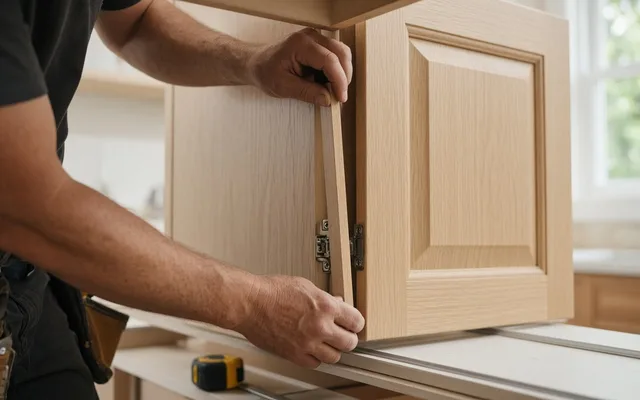 Service guideCabinet Refacing & Installation
Cabinet refacing replaces doors, drawer fronts and hardware and covers the exposed box faces with matching veneer, leaving the layout unchanged.
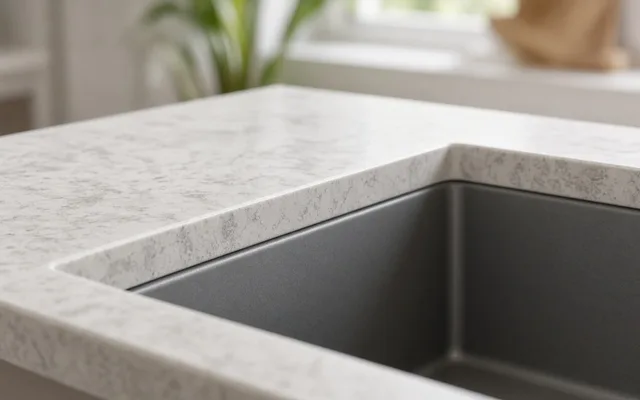 Service guideCountertop Installation
Countertop installation replaces the work surface, sink and often the backsplash on cabinets you keep.
 Service guideKitchen Island Design & Build
A kitchen island is a freestanding cabinet unit with its own countertop, often with seating, storage, a sink or a cooktop.
Homeowner polls
No votes yet. Yours will be the first. · saved on this device
Houzz's 2026 study found 52% of renovators changed the layout but 68% kept the footprint.
No votes yet. Yours will be the first. · saved on this device
No. It is a planning resource and a matching service. The site does not perform any work, employ installers, or sell materials. Requests for estimates are forwarded to independent local professionals, who contact you directly and are responsible for their own licensing, insurance, pricing and workmanship.
No. Requesting an estimate is free and carries no obligation. The professionals who respond provide a free written proposal; whether you meet with them, collect more proposals or hire anyone is entirely your decision. Some pros charge for detailed design drawings, and they should say so before any drawing work begins.
From published sources, each linked beside the number: Angi's project data, HomeAdvisor's and Fixr's cost guides, Houzz's annual kitchen and renovation studies, Zonda's Cost vs. Value report, NAR's Remodeling Impact Report, NAHB's buyer survey, HIRI trackers and EIA's Residential Energy Consumption Survey. Line-item ranges in tables are planning ranges anchored to those benchmarks.
Because ratings are easy to fabricate and hard to verify, and a resource that publishes them ends up vouching for work it never saw. The reviews guide instead explains how to evaluate feedback you find elsewhere and what to request directly from a pro, such as references from similar jobs and a proposal that separates scope from allowances.
Pros receive requests based on the service area and the scope described in the request. They are independent businesses, not employees, and the site does not certify or supervise their work. Verify license and insurance where your state requires them, ask for references, and compare written proposals before hiring anyone.
Your project details are shared with the independent professionals who serve your area for the purpose of providing an estimate. The contact page explains what to include and how the request is handled. Keep sensitive documents such as loan approvals out of the request; a pro does not need them to price a kitchen.
Each stat carries a publication year, and the research inputs behind the site are reviewed in periodic passes. Studies such as Houzz's kitchen trends report and Cost vs. Value publish annually, and the newer edition replaces the older one when it is reviewed. When a figure is preliminary, such as EIA's 2024 microdata, the detail says so.
 LocationsRegional planning notes
How climate, codes and prices change a project across U.S. regions.
 ArticlesPlanning articles
Cost guides, checklists and mistakes to avoid before you sign.
 ReviewsHow to read reviews
What genuine contractor reviews look like and what they leave out.
Tell us the size, the condition of what is there now, and what you want to change. Kitchen Scopebook passes your request to independent local professionals, who reply with written, no-obligation estimates. The service is free to use.