How many written proposals will you collect before choosing?
No votes yet. Yours will be the first. · saved on this device
Loading...

Kitchen Scopebook · Reviews
Reviews of kitchen contractors are most useful when they describe scope, schedule, communication and how problems were handled, and least useful when they are a star count. This page explains what a genuine review contains, which patterns are warnings, and what to verify directly: license, insurance, references from similar jobs and a proposal that separates scope from allowances.
This site does not publish ratings or testimonials. Any resource that does is vouching for work it never saw, and star averages are easy to shape. What it can do is explain how to read reviews wherever you find them, and what to ask a pro for in their place. Houzz found 87% of kitchen renovators hired at least one professional; choosing that professional well is worth an evening of reading.
A kitchen is a multi-trade, multi-week job in the middle of the house. The qualities that matter are sequencing, communication, and how surprises are priced and handled. Read for those. Cost pressure raises the stakes: the 2026 Houzz & Home Study found 37% of renovators went over budget and 34% used credit cards in 2025, so a pro whose past clients say the job landed on the proposal number is worth more than one who charms at the first visit.
It names the scope: refacing, a same-layout renovation, a wall removal. It gives a timeline, ideally with the promised and actual dates. It says how the crew handled dust, the temporary kitchen and the schedule. It describes at least one problem, because every kitchen has one, and how the pro priced and fixed it. It mentions whether the final cost matched the proposal and why it differed. A review with those five elements tells you more than fifty that say the kitchen is beautiful.
Reviews that match your scope matter most. A pro with glowing feedback on countertop swaps may have little experience with structural work. Look for reviews describing projects like yours in houses like yours, and note how long ago they were written; crews and management change. A review from a job in a house of your era is worth three from new construction. Scope words matter because homeowners hire for very different work: Houzz found of kitchen renovators enlarged the footprint and added or upgraded an island, and praise for a repair call says little about that work.
Homeowner polls
No votes yet. Yours will be the first. · saved on this device
No votes yet. Yours will be the first. · saved on this device
 Service guideComplete Kitchen Renovation
A complete kitchen renovation replaces cabinets, counters, flooring, lighting and usually appliances under a single plan, and may relocate plumbing, gas and electrical or remove a wall.
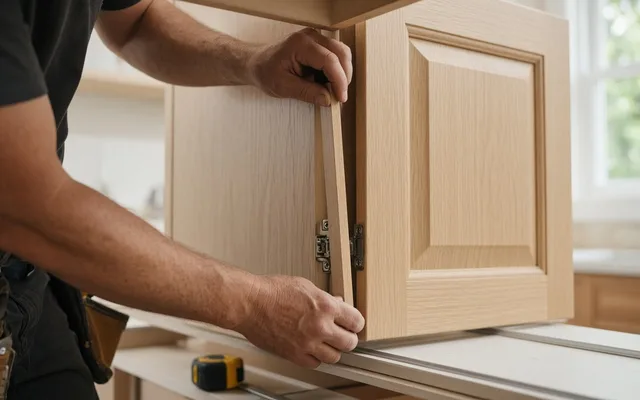 Service guideCabinet Refacing & Installation
Cabinet refacing replaces doors, drawer fronts and hardware and covers the exposed box faces with matching veneer, leaving the layout unchanged.
 Service guideCountertop Installation
Countertop installation replaces the work surface, sink and often the backsplash on cabinets you keep.

Tell us the size, the condition of what is there now, and what you want to change. Kitchen Scopebook passes your request to independent local professionals, who reply with written, no-obligation estimates. The service is free to use.
A cluster of short, similar reviews posted within days of each other. Reviews that never mention a problem. A pro who responds to criticism by attacking the reviewer rather than explaining. Repeated mentions of schedule slips without explanation, of subcontractors who did not show, or of change orders that appeared without discussion. And, specific to kitchens, any pattern of counters that did not fit, appliances that did not fit their openings, or inspections failed on rough-in.
Weigh volume against age. Ten detailed reviews over three years from a small shop can mean more than two hundred one-line reviews from a franchise. Houzz found 37% of renovators went over budget; a pro whose reviews consistently describe finishing on the number is rare and worth noticing. Reviews that mention the same project manager by name are a sign the pro's process is stable.

License, where your state or city requires one, checked on the licensing board's site rather than a photocopy. General liability insurance and workers' compensation, by asking for certificates sent from the insurer. References from two or three recent jobs of your scope, and a phone call to each asking the same questions: was the schedule kept, how were surprises priced, would you hire them again. A written proposal that separates cabinets, counters, trades, allowances, permits and exclusions.
Then ask process questions in person. Who is on site daily? Who pulls permits? How are hidden conditions priced? What is the payment schedule, and is the final payment tied to the punch list? A pro who answers those cleanly has done this many times. The contact page lists the four questions that sort proposals fastest.
Reviews narrow the list; the proposal decides. Two pros with equally good feedback and a $9,000 gap in price usually differ in scope, allowances or cabinet grade, not honesty. Build the comparison table described on the contact page and find the gap. If the cheaper proposal excludes permits, disposal and plumbing, the gap closes. If it is the same scope and one pro is simply cheaper, ask that pro why; sometimes the answer is a slower season, sometimes a thinner crew.
When you are ready, read the services hub for what each scope's proposal should contain, run the calculator for a sanity check on totals, and take the quiz if scope is still in question. Then send one brief to the pros whose reviews and answers held up, and compare what comes back on scope before you compare it on price. Start early: HIRI's Q1 2026 tracker found 15% of homeowners plan a $5,000+ kitchen remodel within a year, so the pro with the strongest reviews may also have the longest wait.
Treat them as a rough filter, not a verdict. Averages are shaped by who is asked to review and when. Read the text of a dozen reviews, favoring those that describe scope, schedule and problems. A 4.6 with detailed accounts of surprises handled well is more informative than a 5.0 built on one-line praise.
Two or three from jobs of similar scope within the past two years. Ask the same questions of each: was the schedule kept, how were hidden conditions priced, did the final cost match the proposal, would they hire the pro again. A pro who cannot produce recent references for your scope is not necessarily bad, but you are then relying on reviews alone.
Read them and the responses. Every busy pro collects some. The question is whether the complaints describe a pattern (fit problems, schedule slips, surprise change orders) and whether the pro's responses explain and take responsibility. One angry review about a delayed cabinet order is noise; four about counters that did not fit is signal.
Yes. Boards list status, expiration, disciplinary history and sometimes bond and insurance information, and the check takes two minutes. A photocopy can be out of date. In states without a contractor license, check for a business registration and ask for insurance certificates sent directly from the insurer.
Reviews of design-build firms should also cover the design phase: whether drawings were accurate, whether selections were managed, and whether the design fee was credited to construction. Reviews of general contractors focus on execution. If you are hiring separately, you will be reading two sets of reviews and judging coordination yourself.
It is a mild one. Some pros ask after the cabinets are set because that is when homeowners are happiest. A review written before the punch list is complete misses the part of the job where problems surface. Politely wait, then write an honest review that describes scope, schedule and how issues were handled.
The proposal. Reviews tell you how a pro has behaved on other jobs; the proposal tells you exactly what you are buying on yours. A detailed proposal from a pro with modest reviews is easier to enforce than a vague one from a pro with glowing reviews. Use both, but sign on the proposal.
A kitchen island is a freestanding cabinet unit with its own countertop, often with seating, storage, a sink or a cooktop.