How many written proposals will you collect before choosing?
No votes yet. Yours will be the first. · saved on this device
Loading...

Kitchen Scopebook · Free estimate
Describe your kitchen once, clearly, and independent local professionals will respond with a free written proposal. Include dimensions, photos, the appliance list, what stays and what moves, and your target range. There is no obligation. The better the brief, the closer the proposals will line up, and the easier it is to see which one is actually cheaper.
Three pros given three different descriptions will return three proposals that cannot be compared. The fix is one written brief sent to all of them. It does not need drawings; it needs the facts a pro would otherwise have to guess: how big the room is, what is in it now, what you want changed, and what you want left alone. This page lists those items and the questions to ask when the proposals come back.
If you have not settled scope, spend ten minutes on the quiz or the services hub first. A request that says 'new kitchen' invites a gut-renovation price; a request that says 'reface existing boxes, new quartz counters, keep the layout and appliances' invites the number you actually want.
Start with the room: length, width, ceiling height, and the linear feet of upper and lower cabinets. Add four photos from the corners and one of the sink base interior. List appliances with model numbers if known, and say which stay; by our analysis of the EIA's 2024 household survey, 26.6% of occupied homes run a main refrigerator ten or more years old and 20.6% a dishwasher that old. State whether the layout stays, and if not, what moves. Say what the current kitchen does badly. Give a target range; pros price to a budget, and hiding it produces proposals that miss high or low.
Include the practical constraints: whether you can be without a sink for six weeks, whether there is a second cooking space, where a dumpster can go, and whether an HOA or condo board must approve the work. Houzz found 87% of kitchen renovators hired a pro; the ones who got useful proposals were the ones who said what they wanted. Mention financing too: Houzz found 34% of renovators used credit cards in 2025, and a home-equity line takes weeks to arrange.
Four questions sort proposals fast. Which existing cabinets and utilities can reasonably stay? Are appliance installation, countertop cutouts and debris disposal included? Which items are fixed-price and which are allowances? When will the sink and cooking appliances be unavailable, and for how long? A pro who answers all four in writing is showing you how they run a job.
Then ask about process: who pulls permits, how hidden conditions are priced, how change orders are approved, what the payment schedule is, and who is on site day to day. The reviews guide covers what to verify about a pro's history. Ask for the same items from each pro so the answers can be laid side by side. If other repairs are waiting, list them: EIA's 2024 survey found 26.6% of homes run a main refrigerator ten or more years old, and trades already on site price small add-ons better.
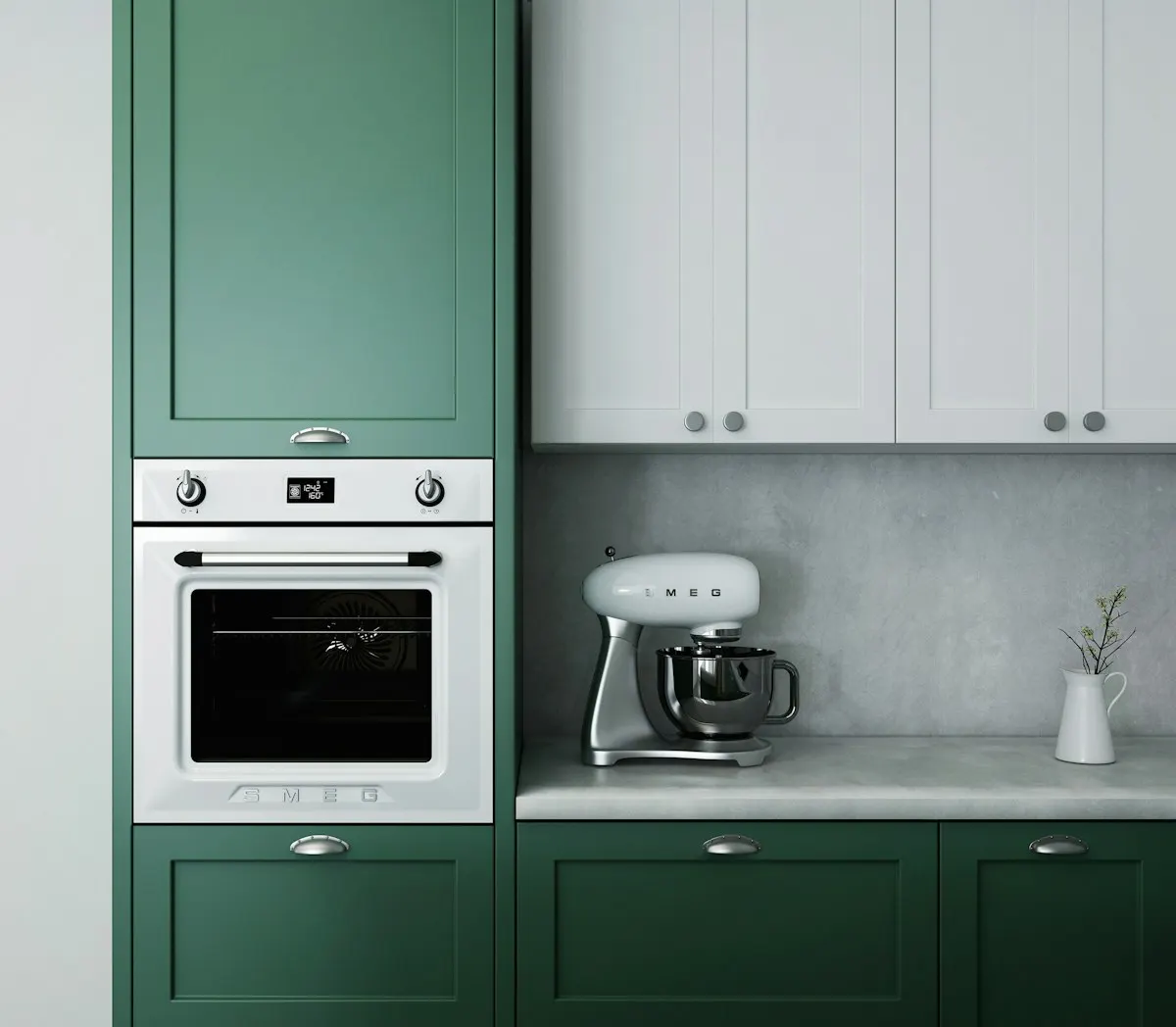
Put them in a table with a row per line item: cabinets, counters, plumbing, electrical, flooring, appliances, demolition, permits, design, allowances, contingency. Blank cells are exclusions, and exclusions are where a low total hides. Match cabinet grade and door style across bids; a stock box and a semi-custom box at the same door style differ by thousands. Compare counter thickness and edge. Check that each proposal states the same square footage and linear footage, since a bid priced on 18 linear feet cannot be compared to one on 22.
NAR found 54% of remodelers used home equity to pay, which takes weeks to arrange; ask each pro how long their price holds and when a deposit locks the cabinet order. Then use the calculator as a sanity check on the totals. If two totals still differ by more than a few thousand dollars after the table is filled in, ask both pros to walk you through the gap line by line.
Independent professionals who serve your area and handle your scope receive the brief and contact you directly, usually within a few business days. Expect a site visit before a written proposal; a serious price for anything beyond counters requires seeing the room. Meet more than one. Collect proposals, compare them as above, and decide. No one is obligated at any point, and the site does not take part in the contract or the payment. Timing is worth deciding early: HomeAdvisor estimates 6 to 10 weeks of construction for a kitchen remodel, plus roughly a month of planning beforehand.
If you are early in planning, say so. Many pros will give a range for a scope without a visit so you can decide whether to proceed. The polls show how many proposals other homeowners are collecting; three is common. A range from photos is not a proposal, but it tells you whether the scope you have in mind fits the budget you have in mind before anyone drives out.
Homeowner polls
No votes yet. Yours will be the first. · saved on this device
No votes yet. Yours will be the first. · saved on this device
No. Dimensions, photos and a clear description of what stays and what changes are enough for a pro to give a range and decide whether a site visit makes sense. Drawings come after you choose a scope and often after you choose a pro. If you already have a designer's plan, attach it; it makes proposals far more comparable.
Three written proposals built on the same brief is the practical standard. Fewer than two leaves you no comparison; more than four takes weeks of site visits and rarely changes the decision. If the three come back wildly different, the brief was unclear or one pro misread the scope, so ask before assuming the low bid is a bargain.
Yes, as a range. A pro who knows you are planning $30,000 to $40,000 will propose a scope and material grade that fits, and will say plainly if the scope cannot be done for that. Hiding the number produces proposals that miss in both directions and wastes everyone's site visits.
For anything beyond a straight countertop swap, yes. A pro needs to see cabinet condition, wall plumb, floor level, panel capacity and the path for debris. Many will give a ballpark range from photos and dimensions first so you can screen before scheduling visits, which saves time on both sides.
That is your choice. You can still ask that pro to separate the proposal into the line items listed on this page and to explain allowances and exclusions. A single detailed proposal you understand is better than three totals you cannot compare. Ask for references from two recent jobs of similar scope.
From request to a written proposal typically takes one to three weeks: a few days for pros to respond, a week to schedule site visits, and several days for each pro to price cabinets and counters with suppliers. Complex layout changes with drawings take longer. Cabinet lead times start only after you sign, so plan the calendar accordingly.
No. Requesting estimates carries no obligation and no fee. You may collect proposals and decide not to proceed, postpone the project, or hire someone you found elsewhere. Pros understand this; a clear no with a short reason is a courtesy that keeps the relationship useful if you return later.
 Service guideComplete Kitchen Renovation
A complete kitchen renovation replaces cabinets, counters, flooring, lighting and usually appliances under a single plan, and may relocate plumbing, gas and electrical or remove a wall.
 Service guideCabinet Refacing & Installation
Cabinet refacing replaces doors, drawer fronts and hardware and covers the exposed box faces with matching veneer, leaving the layout unchanged.
 Service guideCountertop Installation
Countertop installation replaces the work surface, sink and often the backsplash on cabinets you keep.
 Service guideKitchen Island Design & Build
A kitchen island is a freestanding cabinet unit with its own countertop, often with seating, storage, a sink or a cooktop.