Which cabinet finish are you leaning toward?
Wood tones (29%) edged past white (28%) in Houzz's 2026 study.
No votes yet. Yours will be the first. · saved on this device
Loading...
Kitchen Scopebook · Materials
Kitchen materials should be chosen in the order they are installed: cabinet box construction first, then door material and finish, then countertop surface, then flooring, lighting and ventilation. Each has a durability tier and a cost tier that rarely line up with looks. This guide compares the options homeowners are actually choosing, using Houzz, NKBA, NAHB and EIA figures, and explains what each one asks of the trades.
By Kitchen Scopebook editorial · Updated 2026-09-25
Showrooms are arranged to sell a look. A remodel is built from materials, and materials behave differently under a hot pan, a wet sponge, a dropped skillet and fifteen years of drawer pulls. This guide goes through the choices in installation order and asks the same questions of each: how is it built, how long does it last under real use, what does it cost installed, and what does choosing it force the plumber, electrician or fabricator to do differently?
The figures come from Houzz's kitchen trend studies, NKBA's designer surveys, NAHB's buyer research and EIA's appliance stock data, each named where used. Where the site's countertop and cabinet service pages already carry a cost table, this guide points to them rather than repeating the rows, and it links to the comparison pages where a two-way choice deserves its own treatment.
The box is the part you never see and the part that decides lifespan. Particleboard boxes with a melamine skin are standard in stock lines and many semi-custom ones; they are fine when kept dry and fail at the sink base when they are not. Plywood boxes cost more, hold screws better, tolerate a leak longer and are worth specifying on the sink and dishwasher bases even if the rest stays particleboard. Ask whether the back panel is full thickness or a thin hardboard, because the back is what carries the wall screws.
Framed boxes have a face frame that doors mount to; frameless or full-access boxes mount doors to the box sides and give slightly more interior width, as the glossary explains. Neither is better; frameless needs more precise installation and shows misalignment sooner. Drawer construction matters more than either: dovetailed solid-wood drawers on full-extension, soft-close undermount slides outlast stapled drawers on side-mount slides by a wide margin, and the upgrade is a small share of the cabinet line.
Houzz's 2026 Kitchen Trends Study found 68% of renovators replaced every cabinet, so most projects face this choice. If the existing boxes are plywood or sound particleboard, square and dry, the reface versus replace comparison is worth reading before assuming replacement; refacing keeps a good box and changes everything visible.
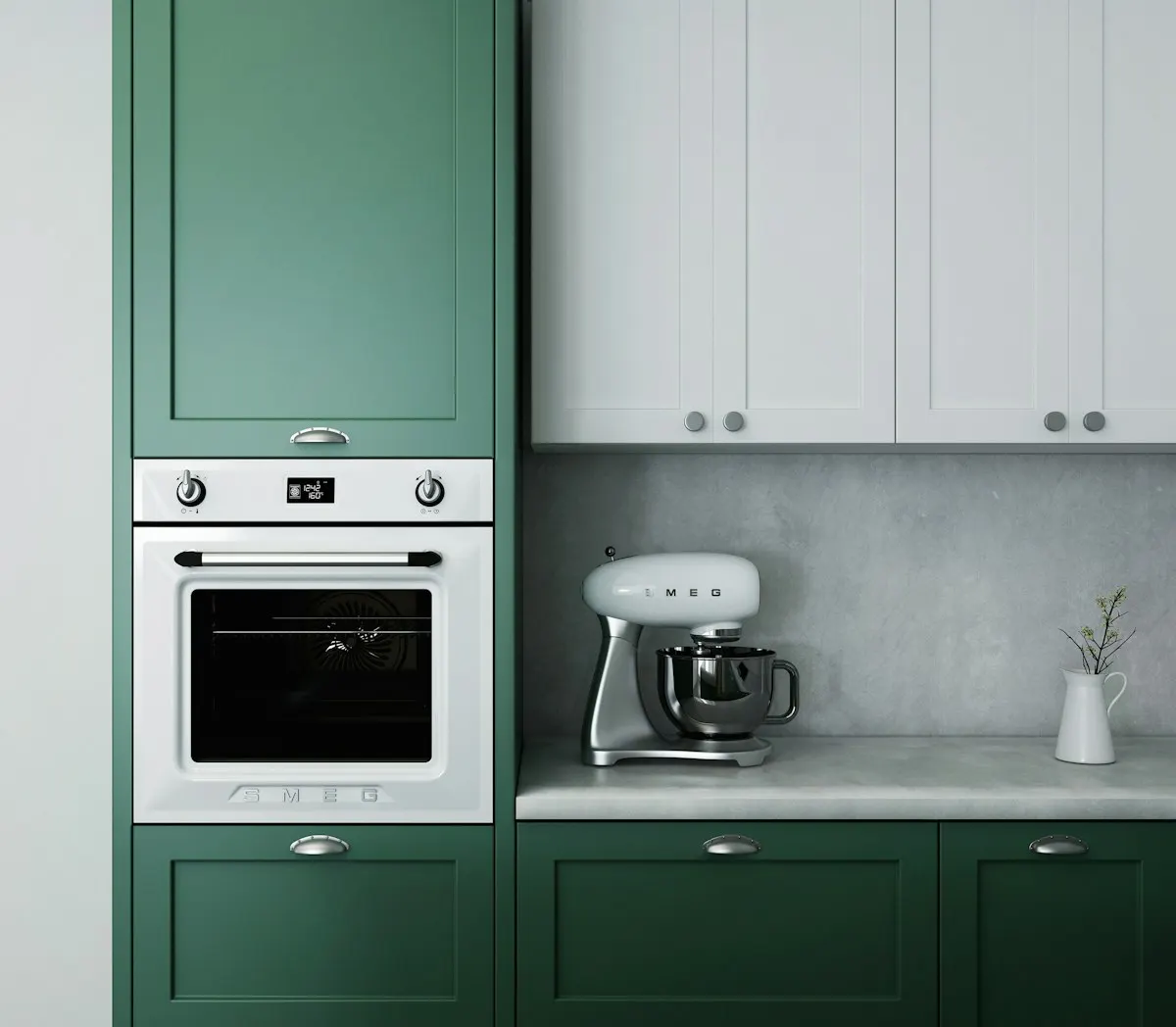
Houzz's 2026 study recorded a real shift: wood-tone cabinets edged past white, 29% vs 28%, ending white's long run as the default. NKBA's 2026 Kitchen Trends Report found 51% of designers name white oak the most popular cabinet wood. Wood tones hide fingerprints and chips better than painted white, which is part of why they are gaining; painted finishes show wear at the handle zone first and are harder to touch up invisibly.
Door materials run from thermofoil and laminate, which are inexpensive and consistent but can delaminate near a self-cleaning oven, through painted MDF, which is stable and takes paint evenly, to solid wood, which moves with humidity and shows hairline cracks at painted joints. For refacing, wood veneer fronts and solid wood fronts cost roughly double the laminate option, and grain matching across a run adds labor. Choose the material for the room's humidity and the household's habits before choosing the color. Open versus closed storage is the same trade-off: among renovators who built a butler's pantry, Houzz found 59% chose enclosed cabinetry and 52% open shelving.
Storage hardware is part of the finish decision. Houzz's 2026 Kitchen Trends Study found 76% of renovators added at least one built-in feature, with pantry cabinets at 47% leading and beverage stations at 24%. NAHB's What Home Buyers Really Want 2024 rates pull-out shelves as essential or desirable for 74% of buyers. Roll-outs, drawer bases instead of door bases, and a tall pantry pull-out are cabinet-order decisions that cost far less now than as a retrofit.
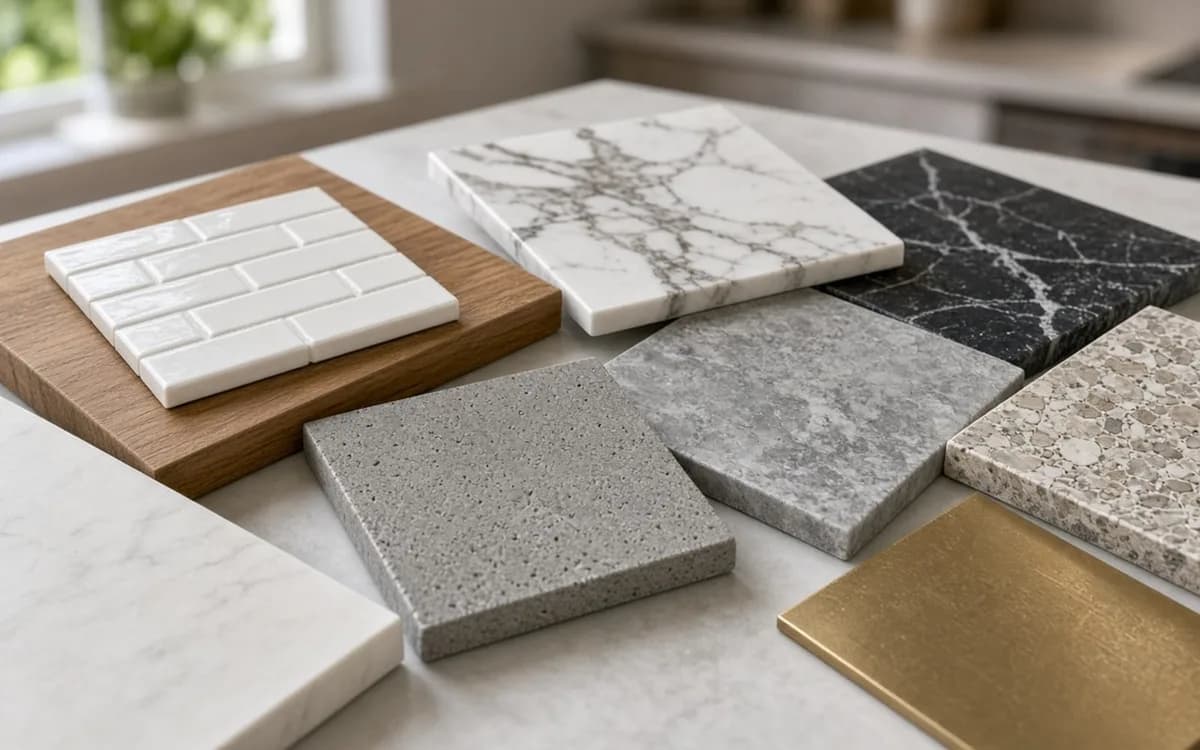
Engineered quartz leads selections in Houzz's 2026 study at 32%, and NKBA found 62% of designers expect it to stay on top. It is non-porous, never needs sealing and is consistent slab to slab, but it can scorch under a pan straight from the burner and its resin yellows in direct sun. Granite tolerates heat, is what 73% of NAHB's buyers say they want, needs periodic sealing and can chip at an eased edge. The quartz versus granite comparison settles the two on habits.
Quartzite is a natural stone that is harder than granite and looks like marble; it costs more, must be sealed, and some slabs sold as quartzite are softer than advertised, so ask for a scratch test at the yard. Marble is beautiful and etches under lemon juice; it suits a baking station, which 9% of Houzz's 2026 renovators added, more than a family kitchen. Butcher block is warm, repairable and inexpensive, needs oiling, and should not surround an undermount sink. Laminate has improved sharply, costs a fraction of stone and is the right answer for a rental or a short stay.
Installed cost is more than the slab. Templating, cutouts for sink and cooktop, edge profile, seam count, removal of the old top and plumbing reconnection are all separate lines, and they are why quotes for the same quartz vary. The countertop service page's cost table covers each; the point here is that the material decision and the sink decision travel together, because an undermount sink adds polished-edge labor and a farmhouse sink changes the base cabinet.
| Surface | Heat | Sealing | Repairable | Installed range (site table) |
|---|---|---|---|---|
| Laminate | Poor | None | No | $25–$50 per sq ft |
| Butcher block | Fair | Oil regularly | Yes, sand and re-oil | $40–$100 per sq ft |
| Granite | Excellent | Periodic | Chips can be filled | $50–$120 per sq ft |
| Engineered quartz | Fair, scorches | None | Limited | $60–$130 per sq ft |
| Quartzite or marble | Good | Periodic | Etching is permanent | $80–$200 per sq ft |
Kitchen floors take water, dropped weight and constant traffic. Porcelain tile handles all three and is cold and hard underfoot; large-format tile reduces grout lines but needs a very flat subfloor. Luxury vinyl plank is waterproof, warm, quiet and inexpensive, and its main limits are that it dents under a heavy appliance foot and cannot be refinished. Engineered hardwood matches adjoining rooms and can be refinished once or twice; solid hardwood matches best and tolerates water least.
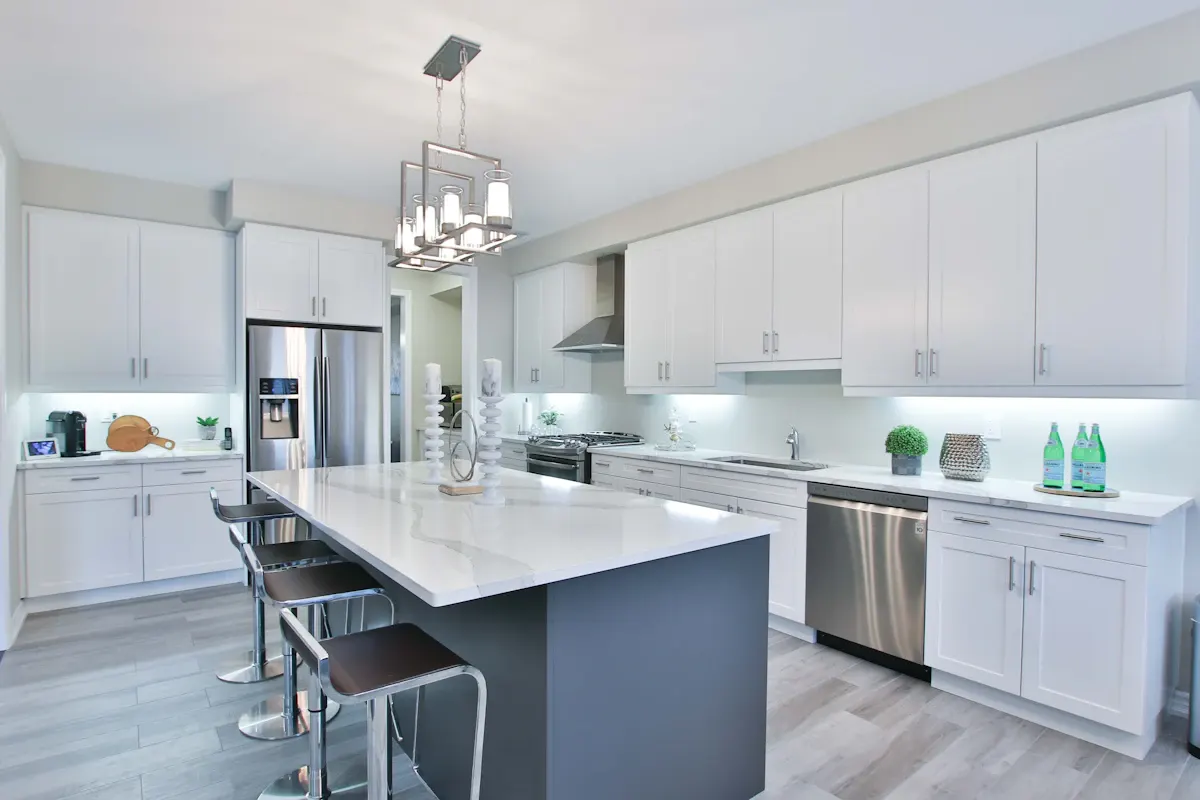
The expensive question is where the new floor stops. In an open plan, a kitchen floor that ends at an invisible line looks like a mistake, so many projects extend the flooring into the dining or living area, which can double the flooring line. Fixr allocates 18% of a kitchen budget to flooring, more than counters, and that allocation is often what a transition decision is really about. Decide the stopping point on the plan, not on site.
Houzz's 2025 study found 67% of renovators installed LED lighting. The practical plan is three layers: recessed ceiling lights for general illumination, under-cabinet strips for the work surfaces and pendants over the island for task and appearance. Under-cabinet lighting is the layer most often left out and most missed afterward; it needs a low-voltage driver and a wiring path planned before drywall closes.
Circuits are the real electrical cost. Current codes generally call for two 20-amp small-appliance circuits for counter receptacles plus dedicated circuits for the dishwasher, disposal, microwave and range, and receptacles on an island. An older kitchen with one or two circuits needs several new runs, and if the panel is full or the service is 100 amps, a panel upgrade enters the scope. The site's calculator carries that as a separate add-on because it is a separate line in any honest bid.
Appliance efficiency is a material choice too. ENERGY STAR reports a certified dishwasher costs about $50/yr to run and saves roughly 8,400 gallons of water a year versus hand washing. Our analysis of the EIA's 2024 household survey shows 75.1% of homes have a dishwasher and 20.6% have one at least ten years old. A remodel is the cheap moment to replace an old unit and to add one where it is missing.
Fuel decides the rough-in. Our analysis of the EIA's preliminary 2024 survey shows 51.7% of occupied homes cook on an electric range, 27.7% on natural gas and only 5.2% on induction, yet NKBA's 2025 report found 2 in 3 designers expect induction to lead within three years. Induction needs a 240-volt dedicated circuit and magnetic cookware; gas needs a line, a shutoff and a hood that actually exhausts. The gas versus induction comparison prices both paths.
Ventilation is where material choices meet code. A recirculating hood filters grease and returns the air; a ducted hood removes it, which is what a gas range and any serious cooking need. Hoods over about 400 CFM commonly trigger a make-up air requirement so the house does not depressurise and back-draft a water heater or furnace. An island cooktop needs a ceiling-mounted hood with a duct run through the joists, and downdraft units struggle with tall pots. The U.S. Fire Administration counted 167,800 residential cooking fires in 2023, which is why clearances and ventilation are code items.
Make each bid name the same things: box material on the sink and dishwasher bases, drawer construction and slide type, door material, counter material and thickness, edge profile, seam count, flooring product and where it stops, lighting layers and circuit count, hood CFM and duct route. When a bid says only "quartz counters" or "semi-custom cabinets", ask for the spec sheet. A pro who has priced a specific product can produce it in a minute.
Then decide where to spend. The durable-under-abuse items, box construction, drawer slides, the sink base, the hood duct and the circuits, are the ones that cost a fortune to fix later and little to upgrade now. The visible items, door color, hardware finish, backsplash tile, are cheap to change in ten years. Spending on the first list and saving on the second is how a midrange budget produces a kitchen that lasts. Run the cost calculator with the premium tier to see what the top of the range buys before deciding you need it.
Homeowner polls
Wood tones (29%) edged past white (28%) in Houzz's 2026 study.
No votes yet. Yours will be the first. · saved on this device
Engineered quartz led Houzz's 2026 study at 32% of upgraded counters.
No votes yet. Yours will be the first. · saved on this device
EIA's 2024 RECS shows induction in about 5% of occupied homes; NKBA designers expect it to lead within three years.
No votes yet. Yours will be the first. · saved on this device
On the sink base, the dishwasher base and any cabinet near a water source, yes: plywood tolerates a leak for longer, holds screws better and does not swell. Elsewhere, good particleboard with a melamine skin performs well when kept dry, and the money is often better spent on drawer construction and slides. Many semi-custom lines let you upgrade only the wet-area boxes, which is a sensible compromise.
Wood-tone stains and clear finishes hide fingerprints, small chips and touch-ups better than painted finishes, which show wear at the handle zone first and are hard to spot-repair invisibly. Houzz's 2026 study found wood tones overtook white for the first time, at 29% versus 28%, and NKBA's designers name white oak the most popular species. If you want painted, choose MDF doors over solid wood to avoid hairline cracks at the joints.
Similar care, with one caveat. True quartzite is harder than granite and resists scratching, but it is porous and needs sealing on the same schedule. The caveat is that some slabs sold as quartzite are softer stones that etch and scratch; ask the yard for a scratch test with a knife blade before buying. Marble-look quartzite costs more than either granite or engineered quartz, so confirm what you are getting.
Either works if it is decided in advance. Flooring under the cabinets makes future floor replacement easier and raises cabinets slightly, which can affect dishwasher and range heights. Stopping at the toe kick is cheaper and is standard in many regions. The mistake to avoid is trapping the dishwasher: it must be able to slide out over the finished floor. Make the proposal state which method is used.
Typically two 20-amp small-appliance circuits for counter receptacles, plus dedicated circuits for the dishwasher, disposal, microwave, range or cooktop and any wall oven, plus island receptacles and lighting. An older kitchen with one or two circuits may need five or more new runs, and a full 100-amp panel may need upgrading. This is why the site's calculator carries a panel upgrade as a separate add-on rather than folding it into the base rate.
Enough to clear the cooking surface, which for a gas range is usually several hundred CFM ducted outside. Many codes require make-up air, a mechanically opened outside-air path, once a hood exceeds about 400 CFM, so that the house does not depressurise and back-draft a furnace or water heater. Recirculating hoods filter grease but remove no heat or moisture. An island cooktop needs a ceiling hood with a duct through the joists.
Yes, with limits. It is warm, quiet, inexpensive and the only surface a homeowner can fully refinish by sanding and re-oiling. It needs oiling every few months, marks under hot pans and should not surround an undermount sink, where standing water darkens and softens the wood. Many kitchens use it on an island or a baking section with stone or quartz at the sink and cooktop.
Yes. Induction heats the pan directly through a magnetic field, so the pan base must be ferrous: cast iron, carbon steel and most stainless steel work, while aluminum and copper do not unless they carry a magnetic base plate. A refrigerator magnet that sticks firmly to the pan bottom is the standard test. Budget for replacing a few pans when switching, and confirm the 240-volt dedicated circuit is in the proposal.
 Service guideCabinet Refacing & Installation
Cabinet refacing replaces doors, drawer fronts and hardware and covers the exposed box faces with matching veneer, leaving the layout unchanged.
 Service guideCountertop Installation
Countertop installation replaces the work surface, sink and often the backsplash on cabinets you keep.
 Service guideKitchen Island Design & Build
A kitchen island is a freestanding cabinet unit with its own countertop, often with seating, storage, a sink or a cooktop.
 PlanningHow to plan a kitchen remodel: the sequence that keeps decisions from undoing each other
Plan a kitchen remodel in a fixed order: decide the scope, confirm the layout, choose cabinets, lock appliance models, then pick surfaces and lighting.
 CostsKitchen remodel cost guide for 2026: what each scope costs and what moves the number
In 2026 a kitchen remodel runs from roughly $10,000 for a cosmetic refresh to $130,000 or more for a full redesign with wall removal, or $75 to $250 per square foot by HomeAdvisor's measure.
 PermitsKitchen remodel permits and codes: what needs one, who pulls it, and what happens without it
Most cosmetic kitchen work needs no permit, but moving plumbing, adding or relocating circuits, running a gas line, changing ventilation or touching a bearing wall almost always does.
 Free toolKitchen remodel cost calculator
Size, material tier and complexity in, a realistic budget range out.
 Free toolKitchen comparisons: the five decisions that move the budget
Side-by-side tables for the decisions that change the price most.
 Free toolKitchen remodel quiz: find your scope and check the numbers
10 questions that show what you already know and what to check next.
 Free toolKitchen remodel polls: see what other homeowners are choosing
See what other planners chose and add your vote.
Tell us the size, the condition of what is there now, and what you want to change. Kitchen Scopebook passes your request to independent local professionals, who reply with written, no-obligation estimates. The service is free to use.