What is your plan for the cabinets?
68% of Houzz kitchen renovators replaced every cabinet; 27% did a partial upgrade.
No votes yet. Yours will be the first. · saved on this device
Loading...
Kitchen Scopebook · Cabinet refacing vs New cabinets
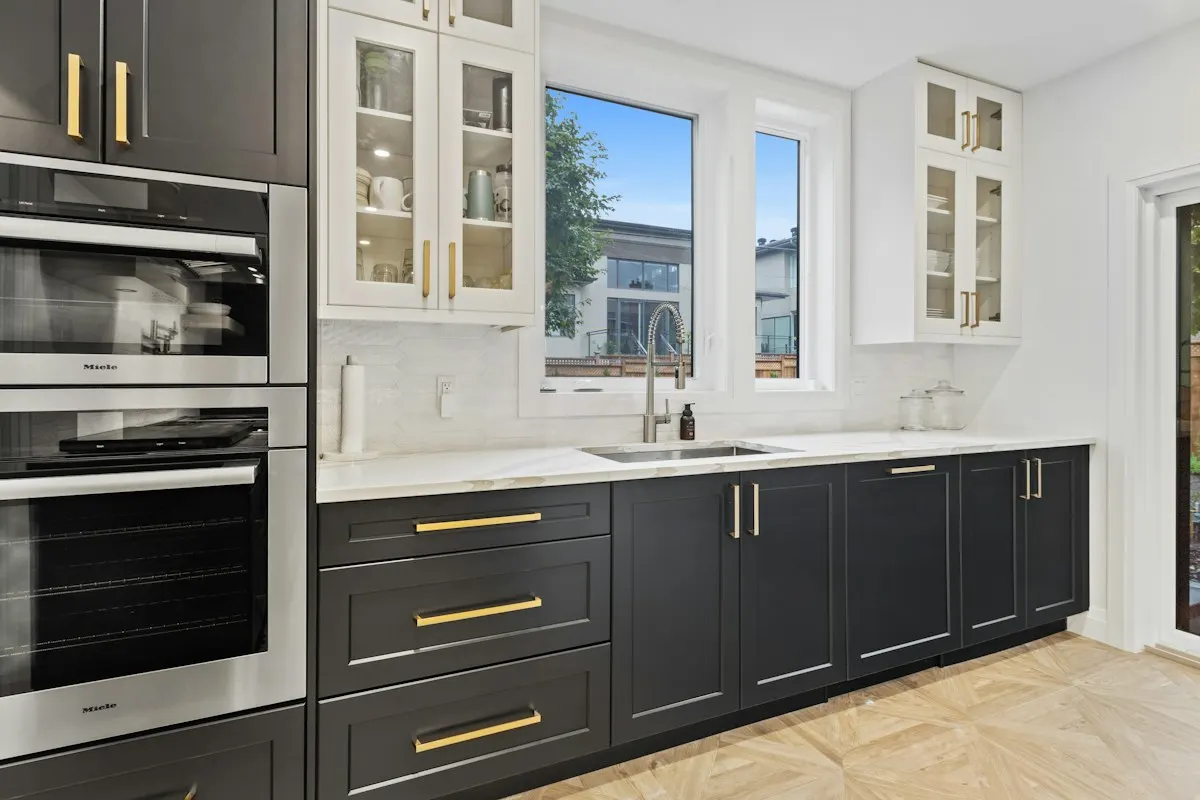
Reface when the boxes are sound, the layout works and the problem is appearance; replace when boxes are swollen or racked, storage is wrong or the layout needs to change. Refacing runs roughly a third to half of replacement and keeps counters in place. Over ten years the gap narrows only if the boxes were marginal to begin with, so inspect first.
Photo: Point3D Commercial Imaging Ltd. · License.
This is the decision that moves a kitchen budget most, because cabinets take 30 to 40 percent of it by every published breakdown. The comparison table and verdict on this page settle the basic trade-off; the sections below go deeper into the scenarios where each option wins, what each costs over a decade, how climate and region affect the boxes, and the mistakes that turn a good refacing job into a regret.
Houzz's 2026 Kitchen Trends Study found 68% of renovators replaced every cabinet, 27% did a partial upgrade and only 5% left the cabinets alone. Replacement is the majority choice, but not always the right one. The cabinet service page covers both jobs in detail; this page is for the homeowner standing in front of the boxes trying to decide.
Refacing keeps the boxes and changes the fronts for a third to half the cost of replacement; new cabinets fix storage, layout and box failures but pull counters and often flooring into the scope. The decision is about box condition and layout, not door style.
| Factor | Cabinet refacing | New cabinets |
|---|---|---|
| Upfront cost (20 linear ft) | $2,000 – $9,000 | $2,500 – $25,500 plus counters |
| Lifespan | 10–20 yrs on sound boxes | 20–30+ yrs with plywood boxes |
| Maintenance | Same as new doors; veneer edges need care | Standard; finish quality matters |
| Appearance | New fronts; interiors unchanged | Fully new inside and out |
| Climate fit | Thermofoil weak near heat and humidity | MDF-panel painted doors resist movement |
| Install time | 2–5 days, sink stays in service | 4–10 days plus counter wait |
| Resale / ROI | Core of the 112.9% minor-remodel recoup (Zonda 2025) | Part of the 71% full-renovation recovery (NAR 2025) |
| Best for | Sound boxes, layout works, budget-first | Failed boxes, new storage, any layout change |
Refacing wins when the boxes are plywood or dry particleboard, the layout works and you want the visible change without a six-week outage. Paired with new counters and lighting, it is the scope Zonda's 2025 Cost vs. Value report credits with 112.9% cost recovery. It loses when you reface a box that fails two years later, or when you wanted drawers and got doors with new fronts.
New cabinets win whenever anything moves, whenever a base is water-damaged, and whenever storage is the complaint. Houzz found 68% of renovators replaced everything; most of them had one of those three reasons. See the cabinet page for the inspection checklist.
The first kitchen is a 1998 build with plywood boxes, oak doors that are tired, a layout that works and a homeowner who wants a lighter room. Refacing wins outright: new shaker fronts in a painted or white-oak finish, new hinges and slides, veneered box faces, new counters if desired. The boxes have twenty years left. Spending on replacement here buys nothing the homeowner asked for.
The second kitchen is a 1985 build with particleboard boxes that have swollen under the sink and around the dishwasher, doors that no longer hang square and a run that ends eight inches short of the wall. Replacement wins: refacing cannot fix a swollen box, and the fronts will not close properly on racked frames. New semi-custom boxes fix the storage, fill the gap and get plywood on the wet bases. A leaking dishwasher is a common way those bases get wet, and our analysis of the EIA's 2024 household survey found the old-dishwasher share among dishwasher homes runs 4.1 points higher in owner-occupied houses built before 1990 than in newer ones.
The third kitchen is in between: sound boxes but a bad layout, or good boxes with too few drawers. Here the honest answer is that refacing solves the wrong problem. Houzz found 52% of renovators changed the layout, and a layout change means new boxes in new positions. Storage wants push the same way: Houzz's 2026 Kitchen Trends Study found 47% of renovators added pantry cabinets, which usually means new boxes. If the frustration is workflow or storage rather than looks, the scope quiz will steer toward replacement.
Empty the sink base and the dishwasher-side base, then look and press. Particleboard that has taken water swells, crumbles at the edges and feels soft under a thumbnail; plywood delaminates but stays firmer. Check the bottom shelf, the back panel and the toe kick area. Then open every door and drawer: a door that hangs crooked after hinge adjustment means the frame has racked. Pull a drawer out fully and check the slide mounting; stripped screw holes in particleboard sides will not hold new slides.
Look at the wall mounting. Uppers screwed into studs through a solid back or a hanging rail are fine; uppers held by a thin hardboard back and a few screws are a risk under the weight of new doors. Check the face frames for splits at the joints. Finally, count what you want that the boxes cannot give: a drawer bank where a door base sits, a taller upper, a pull-out pantry. If the list is long, refacing is a compromise you will notice every day.
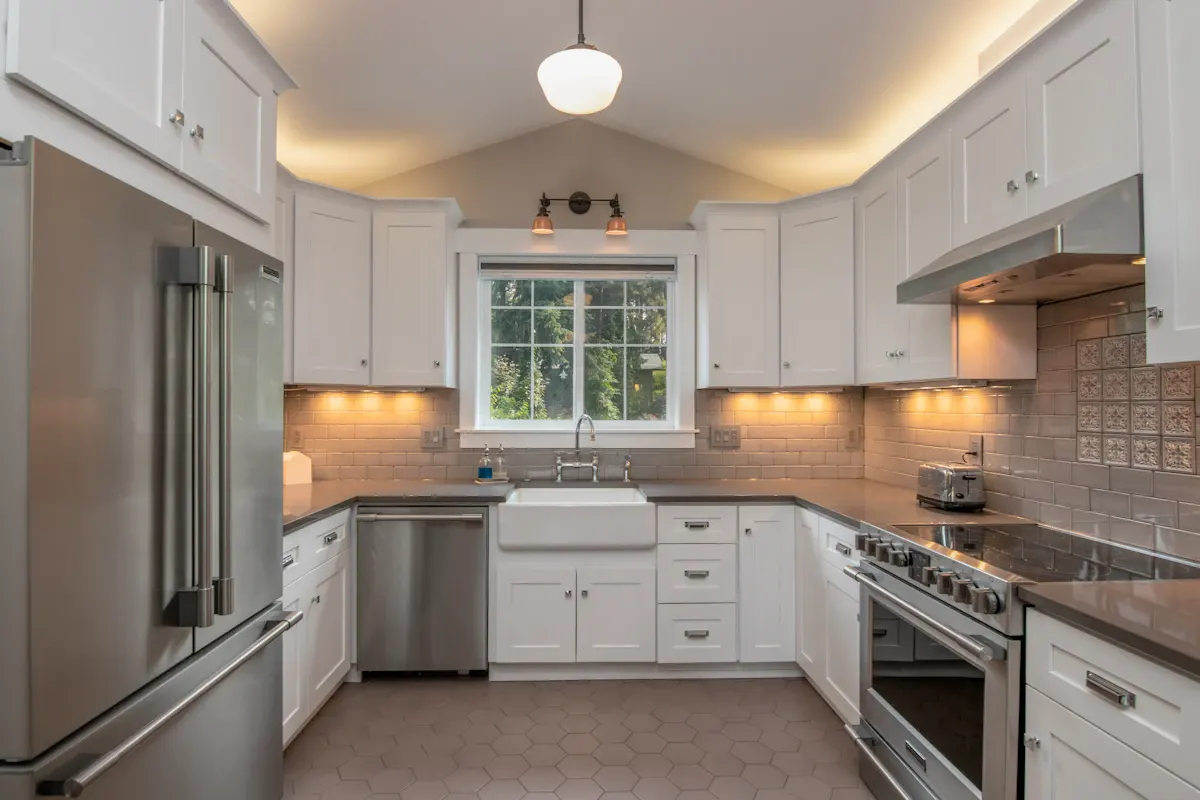
At installation, refacing averages $7,230 per HomeAdvisor, or $100 to $250 per linear foot for laminate fronts (Modernize) and $150 to $450 for wood (HomeAdvisor). The site's cost table puts installed semi-custom cabinets at $200 to $650 and custom at $500 to $1,200 per linear foot, plus $500 to $1,500 for removal and disposal. On a 25-foot kitchen, that is roughly $2,500 to $11,250 for refacing against $5,500 to $17,750 for semi-custom replacement, before the new counters replacement usually forces. Refacing usually keeps the counters.
Over ten years, a refaced kitchen on sound boxes costs nothing more than a replaced one: the fronts, hinges and slides are new in both cases and the boxes were never the wear item. The ten-year cost diverges only when the boxes were marginal, because a sink base that fails in year six under new fronts means a partial replacement with a mismatched box. That is the whole argument for inspecting first: refacing on good boxes is the better value, and refacing on bad boxes is the worst.
Resale rewards the cheaper option. Zonda's 2025 Cost vs. Value report prices a minor midrange kitchen remodel with refaced fronts, new counters, sink, appliances and flooring at $28,458 and finds it recoups 112.9%, the strongest return of any interior project. NAR's 2025 estimates put a full renovation at 71%. Neither number means replacement is wrong; they mean the refresh is hard to beat as an investment when the boxes allow it.
Humidity is the enemy of particleboard. Kitchens in the humid South and on coasts see more swelling at the wet bases, and refacing over boxes that have been through thirty humid summers is riskier than the same job in a dry Mountain West kitchen. Solid wood fronts move with seasonal humidity swings, which is why painted MDF or veneered fronts are the safer refacing choice in regions with wide swings between winter heating and summer humidity.
Housing age tracks region too. Older Northeast and Midwest kitchens are more likely to have site-built or early plywood boxes that reface beautifully, while late-1980s and 1990s suburban stock across the South and West is more likely to have particleboard that has reached the end of its life. Labor rates matter as well: in high-cost metros the labor share of replacement is larger, which widens the gap in favor of refacing where the boxes allow it.
Refacing regrets come from three places. Refacing over marginal boxes, covered above. Choosing a front material that does not suit the room: thermofoil next to a self-cleaning oven, or solid wood in a swing-humidity climate. And expecting refacing to change function: it will not add drawers, raise the uppers or fix a short run, and a homeowner who wanted those will feel the compromise. Ask the refacing bid to include new soft-close hinges and full-extension slides, because fronts on old hardware feel old.
Replacement overruns come from scope creep. New boxes mean new counters, often new flooring under the cabinets, new backsplash to meet the new counter height, and sometimes moved receptacles. Houzz's 2026 Houzz & Home Study found 37% of renovators overspent, mostly through material upgrades and scope growth, and cabinet replacement is where both start. Decide the tier before the showroom, and hold the wood-tone versus painted choice to a decision, not a drift; Houzz found wood tones edged past white at 29% vs 28%.
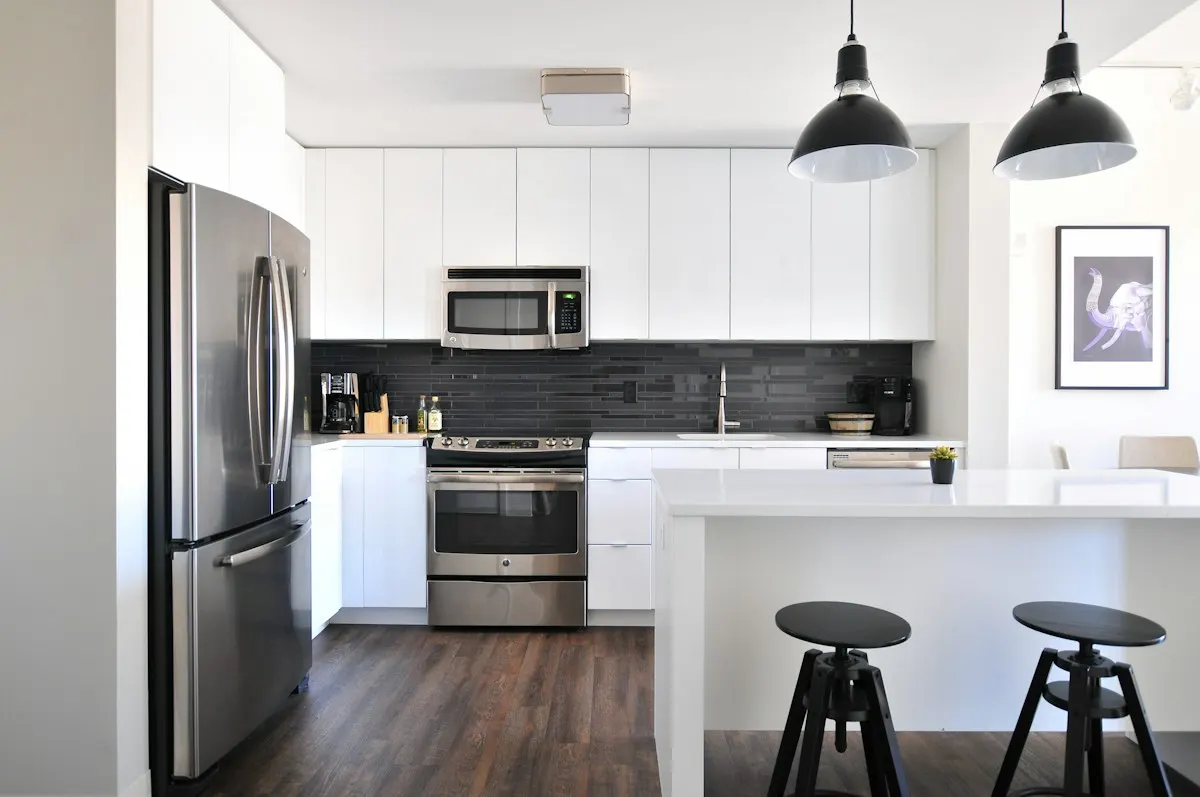
They are different jobs, so compare them on what each delivers. The refacing bid should state the front material, the veneer or laminate for box faces, whether end panels and toe kicks are covered, the hinge and slide hardware, and what happens at exposed interiors. The replacement bid should state the tier, box material on wet bases, drawer construction, slide type, removal and disposal, and whether counters, backsplash and flooring changes are included or excluded.
Then add what each leaves out. If refacing keeps the counters, add nothing; if replacement forces new counters, add the countertop line so the totals are comparable. Ask both pros how they would handle a box that turns out to be worse than it looked. Run the cost calculator at the economy and standard tiers to sanity-check the replacement figure, then use the estimate request to get both jobs priced by independent local pros from the same brief.
Homeowner polls
68% of Houzz kitchen renovators replaced every cabinet; 27% did a partial upgrade.
No votes yet. Yours will be the first. · saved on this device
Wood tones (29%) edged past white (28%) in Houzz's 2026 study.
No votes yet. Yours will be the first. · saved on this device
No votes yet. Yours will be the first. · saved on this device
Only partly. The refacing spend is lost when boxes are replaced, though hardware can sometimes be reused. If you expect to replace within five years, refacing is usually not worth it; if the boxes are sound and ten or more years of service is realistic, refacing is the better spend.
From across the room a buyer sees the same thing, and the minor-remodel category in Cost vs. Value, which assumes refaced fronts, returned more than its cost in 2025. An inspector or a careful buyer opening doors will see original interiors, which rarely affects price unless the boxes are visibly worn.
For sound wood or MDF doors, professional spray painting costs $3,000 to $8,000 for a typical kitchen and lasts five to ten years with care. It does not change door style or fix hardware, and it chips more readily than a factory finish. It is the lowest-cost path when the door style is acceptable.
Look at an exposed edge inside a cabinet or at the back of a shelf. Particleboard shows a uniform speckled core of pressed chips; plywood shows distinct thin layers of wood veneer. Press a thumbnail into the core near the sink base: particleboard that has taken water is soft and crumbly, plywood stays firm even when delaminated. Plywood boxes almost always justify refacing; particleboard boxes justify it only if they are dry and square.
Partly. New drawer boxes and full-extension slides can usually be fitted to existing drawer openings, and roll-out trays can be installed in existing base cabinets, both as separate lines in a refacing bid. What refacing cannot do is convert a door base into a drawer bank, because that requires a different box. If drawers are the main goal, replacing the base cabinets while refacing the uppers is a common middle path.
Not when it is done well. Box faces are covered with veneer or laminate that matches the new doors, end panels are skinned or replaced, and toe kicks are covered. Where it can show is inside: the cabinet interiors keep their original color, and exposed edges at open shelving or glass doors need extra finishing. Ask the bid to state how interiors and exposed edges are handled, and look at a completed job of the same front material.
If the boxes are sound, refacing now and doing nothing in ten years is cheapest, because good boxes outlast two sets of fronts. If the boxes are marginal, replacing now is cheaper than refacing now and replacing later, since the refacing money is lost. The comparison only favors reface-then-replace when you expect to move before the boxes fail, which is where Zonda's 112.9% return on a minor remodel becomes relevant.
Almost always, because counters are templated to the cabinet footprint and rarely survive removal intact. Laminate and butcher block sometimes can be lifted and reset if the layout is identical; stone and quartz usually cannot. A replacement bid should include counters or state that it excludes them. Refacing keeps counters in place, which is one of the main reasons its installed cost sits so far below replacement.
Soft-close concealed hinges and full-extension, soft-close drawer slides at minimum; they are the difference between a kitchen that feels new and one that feels repainted. On older boxes, hinges may need adapter plates and slides may need new drawer boxes. The site's cost table puts a full soft-close upgrade at $400 to $1,500 per kitchen. Make the bid state the hardware brand and type rather than just "new hinges".
 ComparisonEngineered quartz vs Granite
Choose engineered quartz if you want a consistent surface that never needs sealing and you will use trivets; choose granite if you set hot pans down and will seal it every year or two.
 ComparisonKitchen island vs Peninsula
An island needs 42 to 48 inches of clear aisle on every side, so rooms narrower than about 12 feet usually cannot hold one; a peninsula attaches to a perimeter run, protects one aisle and fits rooms down to about 10 feet.
 ComparisonSame-layout renovation vs Layout change
Keep the layout when the work triangle and landing zones already function and the complaint is storage or finish; change it when the triangle is broken, the aisle is blocked or the room is closed off from where the family lives.
 ComparisonGas range or cooktop vs Induction range or cooktop
Gas suits a kitchen that already has a line and a ducted hood and a cook who wants a visible flame; induction suits a kitchen with a 240-volt circuit available, a household that wants faster boiling and easier cleaning, and any home going all-electric.
 Service guideComplete Kitchen Renovation
A complete kitchen renovation replaces cabinets, counters, flooring, lighting and usually appliances under a single plan, and may relocate plumbing, gas and electrical or remove a wall.
 Service guideCabinet Refacing & Installation
Cabinet refacing replaces doors, drawer fronts and hardware and covers the exposed box faces with matching veneer, leaving the layout unchanged.
 Service guideCountertop Installation
Countertop installation replaces the work surface, sink and often the backsplash on cabinets you keep.
 Service guideKitchen Island Design & Build
A kitchen island is a freestanding cabinet unit with its own countertop, often with seating, storage, a sink or a cooktop.
 Free toolKitchen remodel cost calculator
Size, material tier and complexity in, a realistic budget range out.
 Free toolKitchen remodel quiz: find your scope and check the numbers
10 questions that show what you already know and what to check next.
 Free toolKitchen remodel polls: see what other homeowners are choosing
See what other planners chose and add your vote.
Tell us the size, the condition of what is there now, and what you want to change. Kitchen Scopebook passes your request to independent local professionals, who reply with written, no-obligation estimates. The service is free to use.